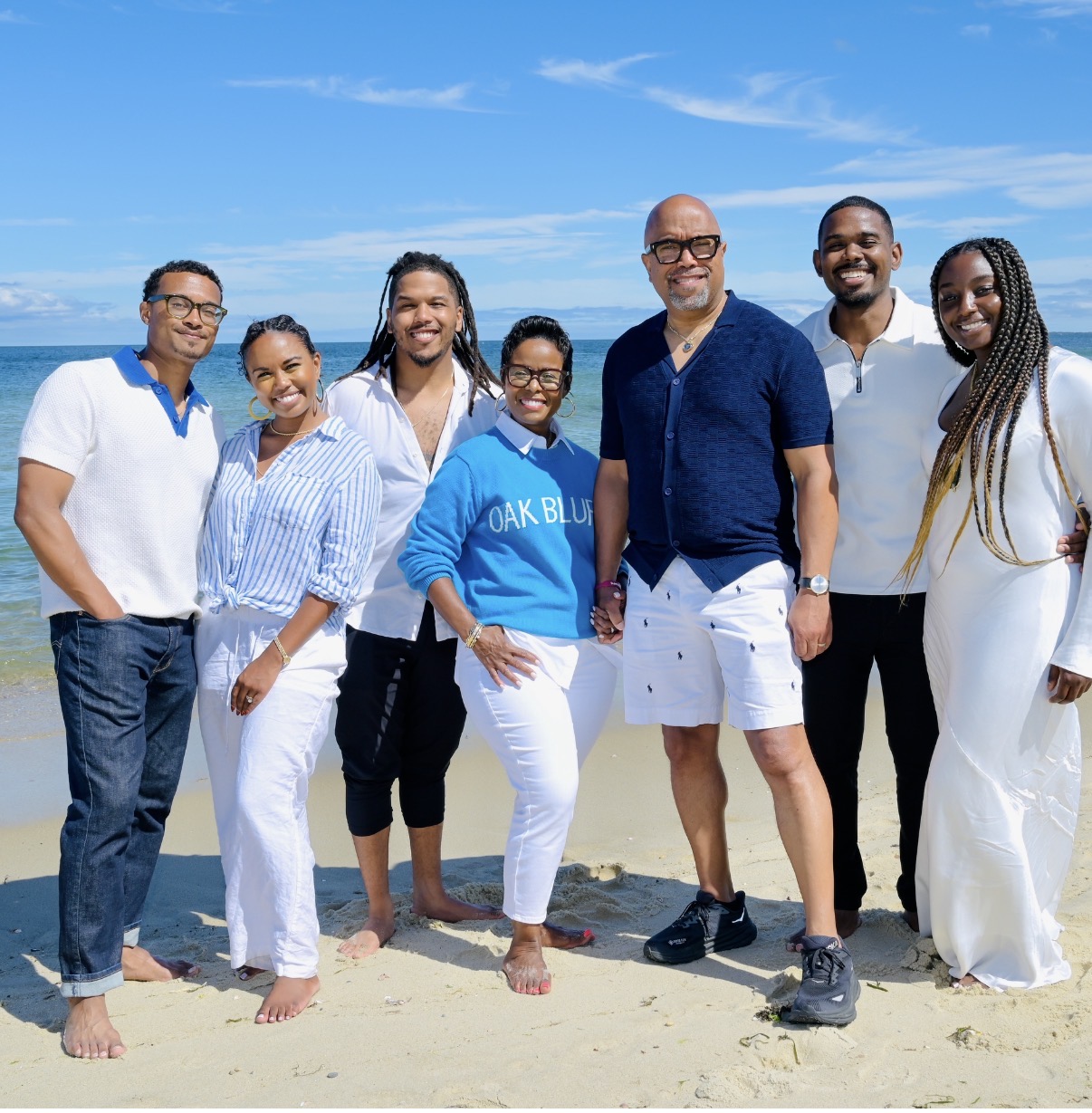
Heart & Hustle is a candid interview series celebrating working parents who are thriving at home and at work. Each feature spotlights leaders balancing the demands of parenthood with the hustle of building fulfilling careers. From late-night feedings to early-morning board meetings, these stories remind us that no two working parent journeys are alike. What they share is a common thread: the courage to define success on their own terms.
Tell us a bit about yourself!
I’m Deborah Porter, Workplace Parent Consultant and certified Fair Play Presenter. I partner with leading global organizations to address a critical gap in today’s workforce: retaining and optimizing the impact of working parents and caregivers—one of the most valuable and often overlooked talent groups. Through keynotes, workshops, and consulting, I equip organizations to build cultures of care that strengthen workforce stability and sustain performance across the caregiving life cycle. My background includes work as a criminal investigator, which shapes how I approach problems. I’m an empty nester with 3 adult children, so I bring both professional expertise and lived experience to the work I do around caregiving, the mental load, and family transitions. Originally from New York, my husband and I now live in Northern Virginia.
What’s one “life hack” your kids have accidentally taught you that you now use at work?
Don’t delay, do it now. Things can shift and change on the family calendar in an instant; a sick child, a forgotten commitment. So if I have something in front of me that can be completed in 20 minutes or less, I do it now.
If your parenting style were a management philosophy, what would it be called?
Delegate, don’t abdicate. Hand over full ownership of a task, with clear standards and a check-in rhythm. This is the practical core of handing kids, or a partner, real responsibility rather than just tasks.
If parenthood gave out job titles, what would yours be right now?
Ahhh. My family affectionately calls me “The General”.
What’s one thing you swore you’d never do as a parent…that you now do regularly?
I used to tell my kids that I wasn’t one of their friends. That they had plenty of friends and I needed to stand firm in my role as parent. Well, now that they are adults, I love being with them in fun and intentional ways, that leans and feels like friendship.
If your experience as a working parent had a soundtrack, what three songs would be on it?
- Lean on Me- Bill Withers
- I’ll be There- Michael Jackson
- Ain’t too Proud to Beg- Temptations
What’s a moment where being a parent made you better at your job, or vice versa?
My background as a criminal investigator taught me to look at all the evidence before drawing conclusions — a skill that turned out to be just as essential in parenting as it was in the field. It’s also shaped how I coach other parents: where is the scene of the crime? Home or work? Who did (or is doing) what? These are all investigative skills that I apply to family life.
How did becoming a parent influence your leadership style?
Becoming a parent — and navigating the mental load of running a household — fundamentally shaped how I think about leadership and ownership. I saw firsthand how easy it is for responsibility to default to one person simply because they’re tracking it, not because they’re the only one capable of doing it. That realization became central to my work: real leadership isn’t about doing everything yourself, it’s about making sure ownership is clear, visible, and fairly distributed. It’s the same principle I now teach organizations through Fair Play — whether it’s a household or a team, things run better when everyone knows exactly what they own, not just what they’re “helping” with.
When have you felt most misunderstood as a working parent, and what do you wish people knew?
We cannot leave our parenting hat at the door when arriving to work. The concerns, decisions and responsibilities of that role go with us right into the workplace. I think more employers understand this and are creating spaces for parents (and caregivers) through employee resource groups. The concern is the number of organizations that are dismantling their ERGs.
What does success look like for you right now in this exact season of life?
Right now, success looks like building something of my own that reflects everything I’ve learned — as a parent, as a former investigator, as someone who’s navigated the mental load firsthand. It’s less about proving myself and more about using this season, with a quieter house because of the empty nest phase and doing meaningful work that actually helps families carry their load a bit more fairly. Success also means giving myself permission to embrace and enjoy this chapter, not just survive it.
If you could design one new workplace policy for all working parents, what would it be?
It’s hard to name just one, a “Named Backup” policy — every working parent has a designated, trained backup at work who can step in seamlessly, no scrambling, no guilt, when a kid is sick, a school calls, or a caregiving emergency hits. Right now, most workplaces treat these moments as individual crises the parent has to solve alone and apologize for. Building real backup coverage into how teams operate — the same way we plan for vacation or parental leave — would remove so much of the invisible stress working parents carry, and it would normalize caregiving as something the whole system supports, not just something one person quietly manages. If I could choose a second, it would be the reinstatement of Work From Home without any mandatory Return to Office policies.
How did family planning intersect with your career ambitions, and in what ways did it shape your personal and professional trajectory (positively or negatively)?
As a criminal investigator, my work was in the field; looking for and interviewing potential witnesses, taking pictures of crime scenes, etc. At about 8 months pregnant I felt more vulnerable than I had at any other time. It was then that I decided to take a career pause.
What strategies, resources, or support systems did you rely on to prepare for parental leave and to navigate the transition back to work?
I had a small but mighty (and amazing) community of friends throughout my early parenting years. Coordinating who was picking up my daughter (we only had her at the time), making sure the emergency contact list was updated and asking for their help when needed. When a friend picked up my daughter, they would feed and bathe her. I would get there as soon as I was able and once home, put her to bed. We cannot underestimate the power of community while parenting.
If you could offer one piece of guidance to new parents entering this phase of life now, what perspective or practices would you share?
My biggest piece of guidance: don’t wait until you’re burnt out to name what you’re carrying. So much of the struggle new parents face isn’t the workload itself — it’s the invisible tracking, the mental load of remembering everything, that quietly defaults to one person. Have the conversation early and explicitly about who owns what, not just who “helps.” And give yourself permission to let go of doing it all perfectly — confidence in this season comes less from balancing everything flawlessly and more from building real systems and real partnerships, at home and at work, that don’t depend on you holding it all in your head alone.
Is there anything else you would like to share that we did not touch on in the questions above?
Trust yourself more. We spend a lot of time doubting our decisions, thought processes and plans. No one knows better than you what you can actually handle. Remember that you are a limited resource and the idea of getting it all done and doing it perfectly just isn’t realistic. Done is better than perfect. And done doesn’t have to mean by you. Parenting isn’t about comparison, it’s about leaning into what works for you and your family. If you’ve never seen it, you get to create it. Don’t shy away from getting whatever support you need for that to happen.